
How to organise a gallery opening, from the invitation to the day after
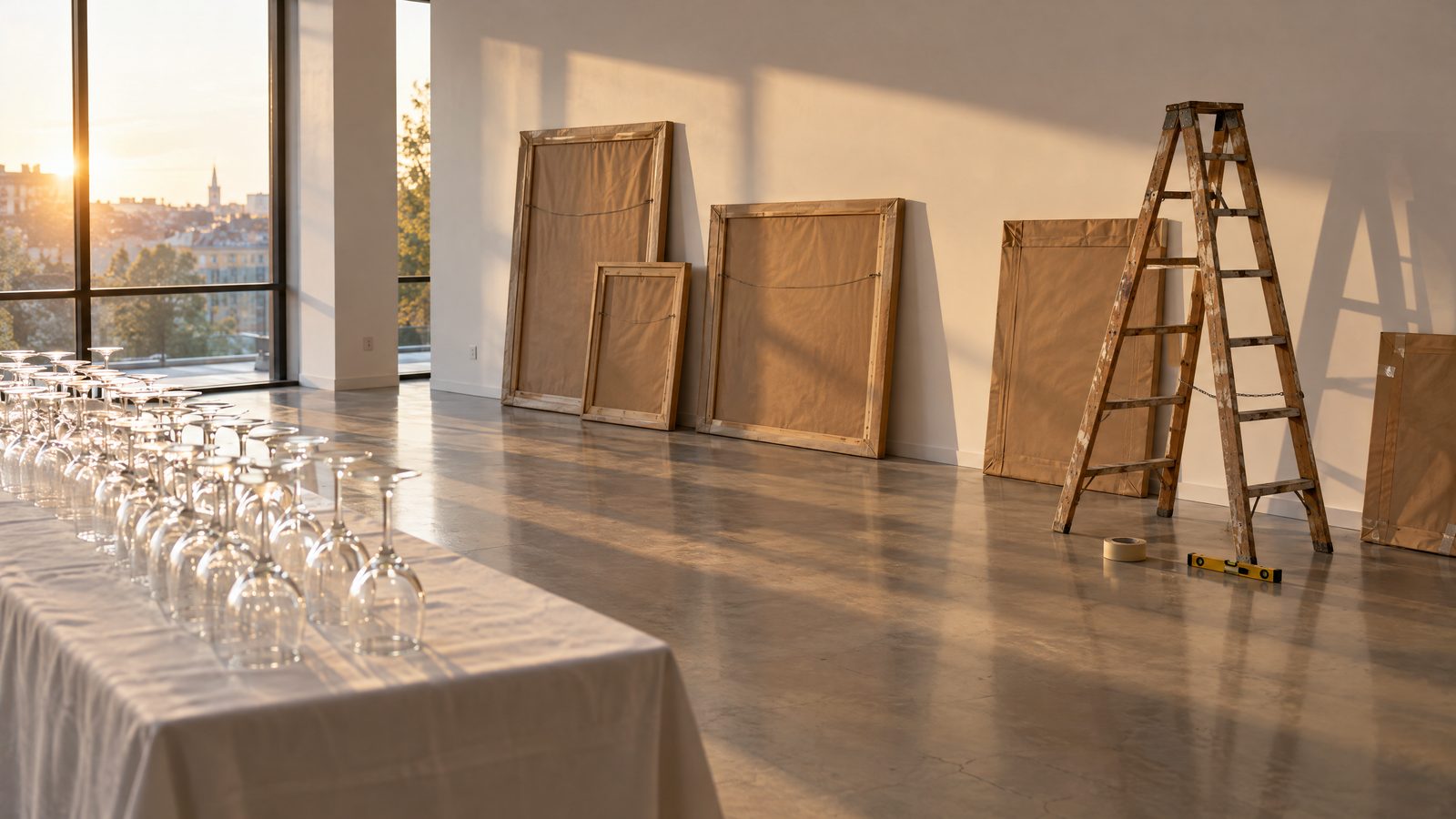
It's nearly ten o'clock. The last guests have gone, someone has left a scarf on the bench, and you're gathering glasses from the table at the back. It went well. A couple spent a long time in front of the large canvas by the window, and the husband asked whether he could come back and see it when it's quieter. You wrote his name on the back of an invitation card. An architect nobody knew came along with a friend and left you her card. Three people who had said yes never turned up.
The next morning, the invitation card is no longer in your pocket. The scarf is still on the bench.
A private view takes weeks to prepare and three hours to happen. But what it leaves behind, the sales, the follow-up visits, the new names, is mostly decided in the days that come after. Here is how to run one from start to finish without losing anything on the way.
Start with the guest list, not the invitation
It's tempting to begin with the card: the image, the type, the paper stock. Yet it's the list that makes the evening. A beautiful invitation sent to the wrong people fills the room and does nothing for the artist.
Begin with what you already know. Collectors who have bought this artist, or who have asked after their work. People who have followed the gallery for years and come to every show. The people the artist wants in the room, which you'll only get if you ask for their list early enough. Then press, curators, friends of the gallery. For each name, ask yourself one thing: why this person, for this show? If nothing comes to mind, they can have the newsletter rather than a personal invitation.
Keep the size of the space in mind as well. A room that's too full stops anyone looking at the work, and a collector who couldn't see anything rarely comes back the next day.
The invitation, and what to do with the replies
Send the invitation three weeks ahead and a reminder a few days before. A printed card still has its charm, especially for regulars, but the email version gives you the thing you actually need: replies.
Ask for them plainly. "Do let us know if you can make it" is enough, with a link or a simple reply to the message. Then keep every answer in one place, not across three inboxes: yes, no, maybe, and how many people they're bringing. A reply like "yes, and I'll bring my daughter, she's just started collecting" is worth keeping word for word. You'll be glad to have it in front of you on the night.
People who don't reply aren't lost. A short personal note a few days before often brings the quieter ones round. Those who decline aren't lost either: invite them to drop in during the week.
The days before
The hang always takes longer than planned. Aim to finish the day before, not on the afternoon itself, so you have time to sort the lighting and walk the show as a visitor would. Labels are up, the price list is printed and checked, and everyone on the team knows which works are already on hold.
This is also the moment to go through the replies with the artist. Who's coming, and who they'd like to be introduced to. Then decide who does what: one person on the door, one or two in the room, and the artist free to talk to whoever they like. If you're serving wine, someone is in charge of it, and it isn't the person who's meant to be selling.
On the night
The door comes first. Whoever is on it has the list of replies, on paper or on a screen, and ticks people off as they arrive. This is how you'll know, the next day, who actually came. They also take down the people nobody was expecting. A friend of a guest, a neighbour who wandered in, an art adviser who happened to be passing. A name, an email address, and if possible a word about what caught their eye.
In the room, the job is mostly listening. A collector who keeps drifting back to the same small drawing, a question about a larger size, a price asked for under the breath: all of it disappears if nobody writes it down. Keep a notebook in your pocket and jot things down as the evening goes, even three words at a time. The name, the work, what was said.
When a work goes on hold, mark it straight away. The red dot on the label is an old habit and a good one, as long as it matches something written down: who reserved it, at what price, and until when. Two collectors who both believe they've reserved the same piece makes for an awkward Monday morning.
The day after, where it really counts
The day after, you'll want a rest. It's actually the best time to write, while the evening is still fresh in your guests' minds.
Thank the people who came, the same day or the next. A short message, personal where you can manage it, with one or two installation shots and a reminder of the dates. If you talked to someone about a particular work, send it to them with the price and dimensions, so they don't have to ask again.
Then write to those who said yes and didn't come. No reproach, obviously: something came up, a child was ill, it rained. Tell them you thought of them and offer a private viewing, on a weekday, at whatever time suits them.
Last, the newcomers, the people who left their name at the door. A note to thank them for coming by, and the offer of hearing from the gallery, if they'd like to. Don't do more than that. They don't know you yet.
Holds from the night before should be confirmed in writing, with the period you agreed. If one falls through, let the next interested collector know without delay.
What to keep for next time
Before you close the file, take half an hour to look back. Which of the people you expected came, and who was missing. Who turned up without an invitation. Which works went on hold, and which sold during the week. That tells you, next time, who to invite first and who to chase earlier.
Make a note on each collector's record that they came, too. It feels trivial. But a year from now, when you're preparing the artist's next show, knowing that someone has been to the last two openings without buying, or that someone else buys without ever coming, changes the way you write to them.
And keep a note of what went wrong: not enough glasses, the reminder that went out too late, the twenty minutes when nobody was on the door. The next private view will be better for those small reasons.
What MARMALADE actually does
We built the fairs and events module in MARMALADE so that the thread doesn't snap between the invitation and the day after. You invite collectors from your contact book, and their replies are tracked in one place. On the night, whoever is on the door checks arrivals in. Afterwards, the event summary brings together who came, who was expected and didn't, who was added on the spot, the works reserved and the sales. From there you send a thank you email to those who came and an offer of a private viewing to those who didn't, and the visit goes on each collector's record, ready for next time.
To compare gallery software on facts, we have gathered the sources in our comparison of gallery management software, and if you're coming from Artlogic, the page MARMALADE or Artlogic explains how a move works. The simplest thing is to try it on your next show. The trial lasts 30 days, with no card during the trial.
Published on 16 October 2026.